

Utilize resources effectively to promote the import and export of goods.
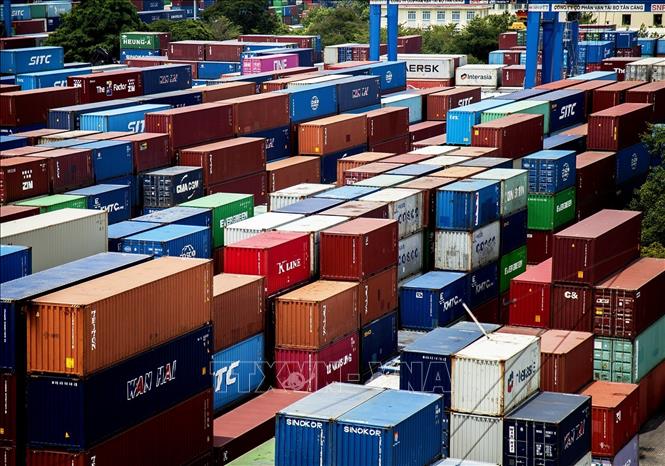
Logistics services play a crucial role and are the link connecting the entire export chain, from production and export organization to the market.
Logistics services play a crucial role and are the link connecting the entire export chain, from production and export organization to the market.
According to Mr. Nguyen Tuong, Senior Advisor of the Vietnam Logistics Business Association (VLA), there are six solutions to effectively mobilize and utilize resources, upgrade warehousing infrastructure, reduce logistics costs, and promote the formation of large-scale export value chains.
Firstly, it is necessary to improve service standards and quality to meet the increasingly high demands of markets. Develop comprehensive and integrated logistics services, striving to reduce logistics costs to increase the competitiveness of goods. Secondly, prioritize investment in and upgrading of integrated infrastructure, focusing on improving logistics infrastructure linked to e-commerce in line with global and regional development trends, alongside the development of air logistics.
In addition, support should be given to building strong logistics corporations, promoting overseas investment and exporting logistics services, creating direction and impetus for market development. Simultaneously, develop cold chain logistics services, cold storage, and refrigerated containers to serve agricultural products, especially high-quality agricultural products. Develop the logistics service market, focusing on key export markets. Strengthen connections among businesses in the industry to cooperate and share advantages. Finally, promote international cooperation in the logistics sector and continue to expand logistics infrastructure connections with countries in the region and globally.
In addition, the development of green logistics and reverse logistics is essential to meet the increasingly high demands of customers for a green, circular, and environmentally friendly economy.
For the Vietnamese logistics service industry, the Vietnam Logistics Business Association (VLA), and especially its members, need to understand and grasp the orientations of the Import-Export Goods Strategy to 2030 in order to develop business strategies, particularly for developing their logistics service market in the context of Vietnam’s increasingly deep integration into the international economy, facilitated by 14 ongoing Free Trade Agreements (FTAs), including the Comprehensive and Progressive Trans-Pacific Partnership (CPTPP), the Vietnam-European Union Free Trade Agreement (EVFTA), the Regional Comprehensive Economic Partnership (RCEP), and the association’s “Innovation, Creativity, and Digital Transformation” strategy.
The Strategy for Import and Export of Goods until 2030, approved by the Prime Minister on April 19, 2022, sets the following goal: “Sustainable development of import and export with a balanced and harmonious structure, leveraging competitive and comparative advantages, developing Vietnamese product brands, enhancing the nation’s position in the global value chain, and serving as a driving force for rapid and sustainable economic growth.”
Accordingly, regarding exports, the average annual growth rate of goods exports is projected at 6-7% during the period 2021-2030. The proportion of processed and manufactured industrial goods will account for 88% of total export turnover by 2025 and 90% by 2030. The proportion of export markets to Europe and America will increase.
Regarding imports, the strategy aims to proactively adjust the import growth rate and control the quality of imported goods. Control the import of goods that can be produced domestically, luxury goods, and non-essential goods. Increase the proportion of imported high-tech machinery and equipment for production and export.
Regarding market development orientation, diversify markets, effectively utilize opportunities from free trade agreements, promote the exploitation of potential markets, and continue to shift the structure of import markets.
According to Ngoc Quynh (VNA) – News Report